
Food is the heart of Chinese hospitality, and every region has its own cuisine, ingredients and traditions. Eating your way through China is not just nourishment — it is the fastest way to understand the country.
Chinese food is famously regional. The classic saying "sweet in the south, salty in the north, sour in the west, spicy in the east" only hints at the diversity: Cantonese dim sum and seafood in Guangzhou, fiery Sichuan and Chongqing hotpot, delicate Jiangnan dishes by the Yangtze, and hand-pulled noodles across the north. Most travel itineraries pass through several culinary worlds in a single week. The good news for visitors is that meals are shared family-style, so a group can sample many dishes at once. Portions are generous, and the culture of "try a little of everything" means you can eat adventurously without committing to one dish.
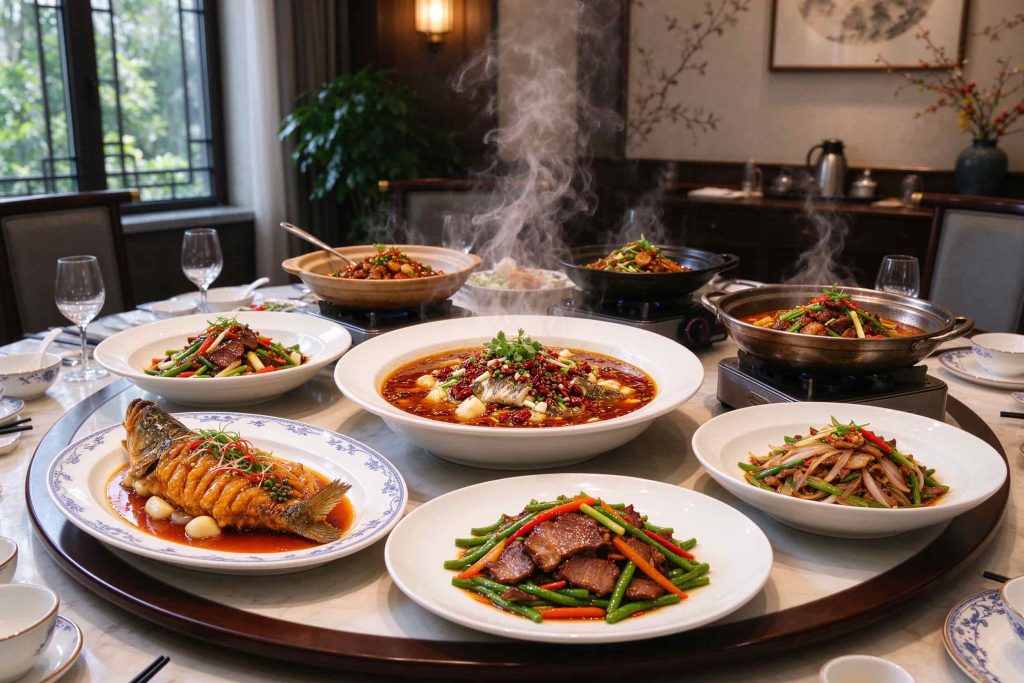
Most restaurants have photo menus, and many now use QR-code menus you can view on your phone and translate with one tap. When the menu is only in Chinese, these habits save the day:
Tea is China's signature drink, from delicate green tea in the east to fermented pu-erh in Yunnan. A tea ceremony or a cup at a traditional teahouse is a peaceful break between sights. Beer is the common choice with meals, while baijiu (a strong grain spirit) appears at toasts and banquets.
Tip: Street food is delicious, but pick stalls with high turnover and food cooked fresh in front of you. Tell us your dietary needs — vegetarian, allergies or halal — and we will book meals and cooking experiences that match, from Peking duck carving to a hotpot masterclass.